

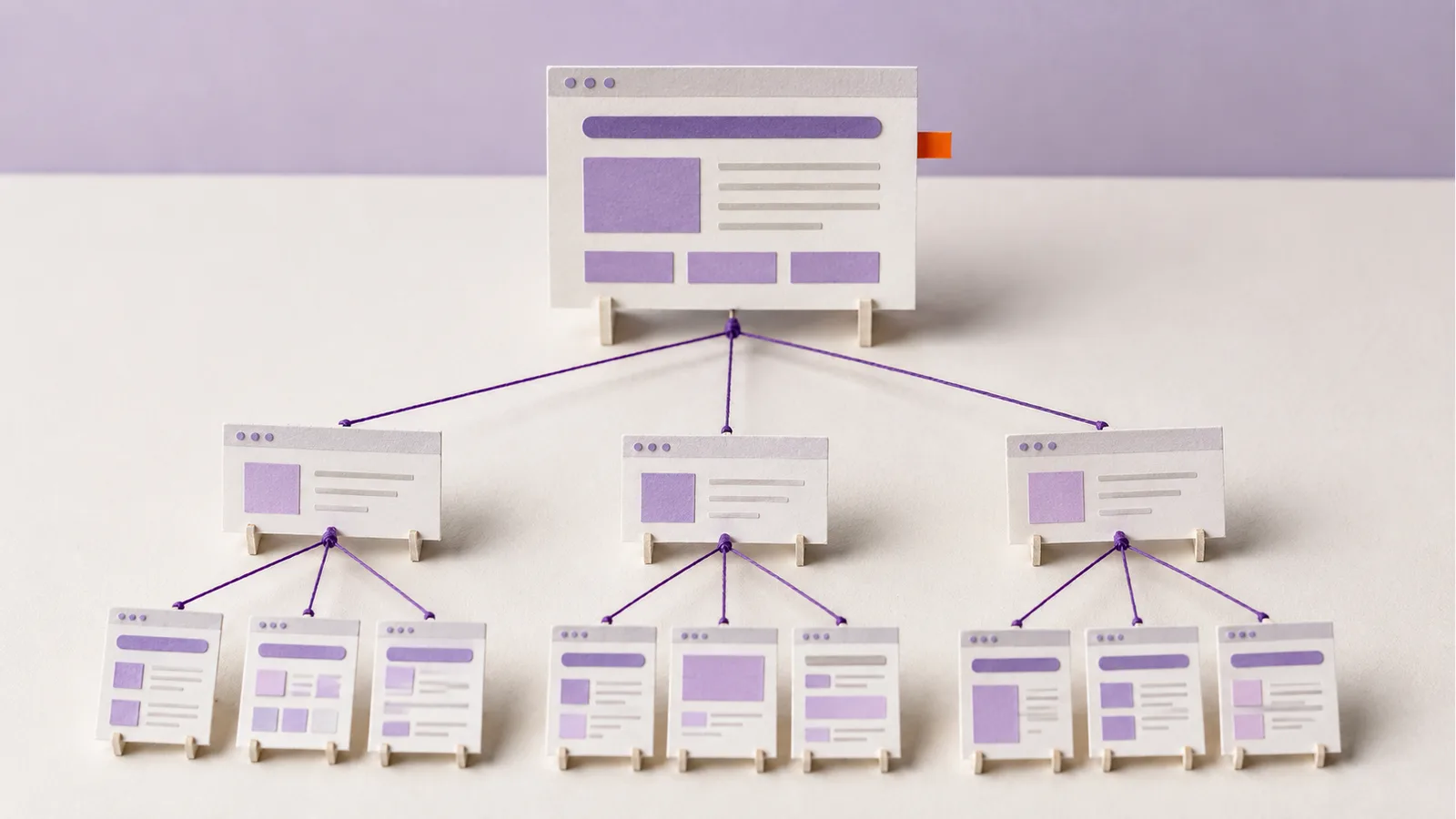
A page address should help someone predict what they will open. Compare /product?id=471 with /kitchen-appliances/induction-cooker/. If the second address leads to that product, it gives a useful clue before the click. The ID-based address may still work; the second is easier to recognize.
A URL identifies a page on the web. On your site, the part after the domain can name the page and show where it belongs. A clear URL helps visitors recognize a link and can help search engines understand the page. It is not a shortcut to higher rankings.
Which Part of a URL Can You Name?
In example.com/phone-repair/battery-replacement/, example.com is the domain, and the remaining path identifies a page. The final part, battery-replacement, is often called the slug. Your publishing system may add a category or language segment before it. Use those segments only when they describe the page’s real place on the site.
A question mark introduces parameters, such as ?color=black. These can be useful for filtering, but unnecessary parameters can create several addresses for essentially the same content. URL design should reflect the page's purpose, not every temporary way to view it.
How Do You Name a New Page?
Start with the page's main job. A service page for replacing phone batteries could use /phone-repair/battery-replacement/ if that path matches the site's real organization. A guide about how to compare induction cookers needs a different address from a product page selling one model.
Use readable words in the audience's language. Separate English words with hyphens, and use lowercase consistently. Leave out short-lived dates and extra category levels unless they are part of the page’s identity. A dated news story is different from an evergreen service page. There is no magic word count for a slug; make it specific enough to identify the page and stable enough to keep.
Do not put a whole keyword list into the path. /phone-repair/battery-replacement/ tells a reader more than /best-cheap-fast-phone-battery-replacement-near-me/.
Should You Change an Existing URL?
Usually keep a working, understandable URL. Rewriting an address just to add a keyword or make it shorter creates a page move, not a simple copy edit. Existing links and bookmarks may point to the old address.
Consider a change when the URL is misleading, the page's purpose has changed, or a wider site migration requires it. First ask whether the current page can be improved without moving it. This is part of improving one page, not a reason to rename every old article.
What If the URL Must Change?
Record the old address and its equivalent new destination. If the page has moved, use a permanent HTTP redirect such as 301 or 308, then update internal links so visitors reach the new address directly. If no relevant replacement exists, do not redirect visitors to an unrelated page. For a moved page, test both addresses: the old one should redirect, and the new one should load the intended content.
For a larger move, also review the sitemap and canonical URLs. The redirect and canonical guide covers the migration decisions in detail.
What Should You Check Before Publishing?
- Can a reader guess the page's subject from the address?
- Does the path match the real page, category, and language version?
- Will the address still make sense if the title or design changes?
- Does the link open the correct page on desktop and mobile?
If it passes these checks, keep the address. Stability saves the work of moving it later.
Frequently Asked Questions
What Is the Best URL Structure for SEO?
A simple, readable structure that reflects the page’s subject and place on the site. Descriptive words can help people understand the destination, but the URL alone will not make weak content rank.
How Do You Create a Friendly URL?
Name the page’s main subject, use readable words in your audience’s language, and apply one consistent style. For English words, separate concepts with hyphens.
Do URLs Matter for SEO?
Yes, they can help people and search engines understand a page and its place on the site. But a tidy URL is only one part of a useful page, so do not expect a ranking gain from renaming it alone.